

.jpg)

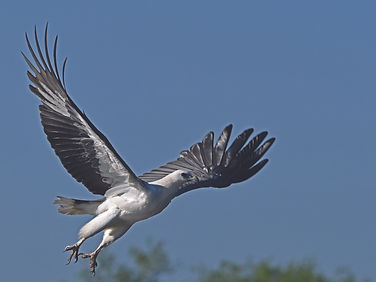
This project aimed to assess the WBSE population in Goa through systematic surveys, including nest identification, monitoring, and threat assessments. Since this was a preliminary study, it primarily focused on identifying nesting sites, documenting breeding behaviour, assessing threats, and promoting conservation awareness via citizen science and community engagement.
The primary objective of this assessment was to evaluate the current status of the WBSE population in Goa through systematic surveys and monitoring. These included:
a. Nest Identification: Locating and mapping active nesting sites across different coastal and riverine habitats.
b. Nest Monitoring: Observing breeding pairs to document nesting success, chick survival rates, and key behavioural patterns.
c. Threat Assessment: Identifying and evaluating potential threats such as habitat loss, human disturbance, pollution, and climate change impacts.
Between August 2024 and March 2025, 60 active White-bellied Sea Eagle nests were identified in Goa with the help of citizen science, terrestrial surveys and aquatic surveys. Most nests were found along the coastline on Casuarina trees, with others located on Indian Almond, Gum Karaya, and various tree species, demonstrating the species' adaptability.
The breeding season, from September to March, included observations of courtship, mating behaviour and parental care at monitored sites. However, of the six nests closely monitored, only three nests successfully produced fledglings which indicate that their breeding success rate might be low. Factors such as habitat loss, human disturbance, and climate change affected breeding success. Key threats varied by region: in North Goa, vehicular movement, noise pollution, and waste dumping were major concerns, while in South Goa, tourism-related activities posed significant challenges.
The project was funded by Persisten Foundation and executed on partnership with the Goa Bird Conservation Network (GBCN), the Goa Forest Department and the Goa State Biodiversity Board (GSBB)